Government Earns Over Rs108bn from Foreign Ship Arrivals at Port Qasim and Gwadar
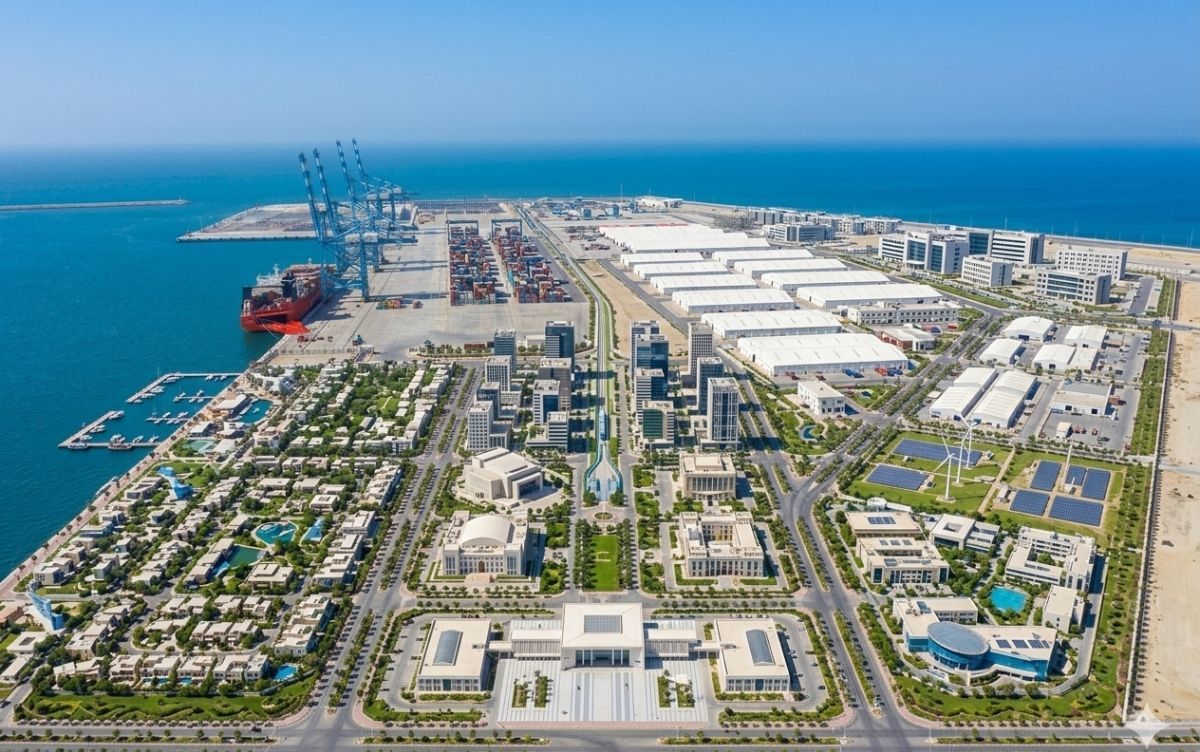
The government has informed the National Assembly that it collected Rs107.696 billion from 7,850 foreign ships that arrived at Port Qasim and Rs573.92 million from Gwadar Port over the last five years (2021–25).
In a written reply during the Question Hour session, Minister for Maritime Affairs Muhammad Junaid Anwar provided a detailed breakdown of vessel types calling at Port Qasim. These included 3,200 container vessels, 2,100 oil and chemical tankers, 2,000 bulk carriers, and 550 LNG carriers.
He further shared vessel size classifications, stating that 2,500 ships were Handymax/medium range, around 3,000 were Panamax, 1,800 were Post-Panamax/Aframax, and 550 were LNG Q-Flex/Q-Max carriers.
According to the minister, the approximate share by country or region of origin was led by the Middle East — including the UAE, Saudi Arabia, Qatar, and Oman — at 40 percent. The Far East, including China, Singapore, Malaysia, and South Korea, accounted for 30 percent, while Europe — including the UK, Netherlands, Germany, and Greece — contributed 20 percent. The remaining 10 percent came from Africa and the Americas.
Regarding Gwadar, the minister stated that total revenue generated by the port during the last five fiscal years amounted to Rs573.921 million. Annual revenue stood at Rs44.3 million in 2020-21, Rs66.8 million in 2021-22, Rs124.44 million in 2022-23, Rs211.32 million in 2023-24, and Rs127 million in 2024-25.
He informed the House that the Gwadar Port Authority (GPA) was established under the Gwadar Port Authority Ordinance, 2002, and operates as a statutory body under the administrative control of the Ministry of Maritime Affairs, Government of Pakistan, falling within the mandate of the federal government.
The minister clarified that there is currently no policy or legal provision for revenue sharing with the Government of Balochistan from the revenues generated by GPA, nor is there any contractual framework entitling the provincial government to a share.
Separately, Minister for National Health Services, Regulations and Coordination Syed Mustafa Kamal informed the House that more than 40 percent of children under five are stunted, indicating long-term undernutrition and repeated deprivation during pregnancy and early childhood. He added that 17.7 percent of children suffer from wasting, with several districts facing emergency levels, while 28.9 percent of children are underweight.