 P.c. China Pakistan Economic Corridor
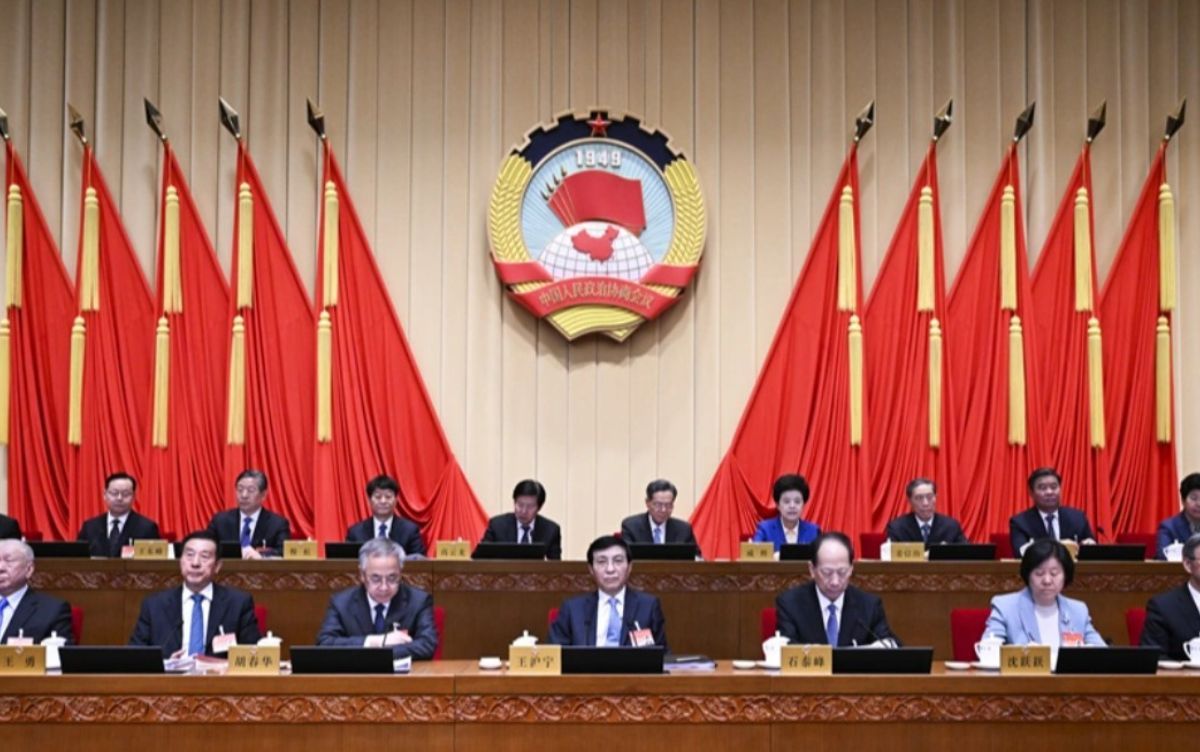
hina has signalled the beginning of a new phase in its economic planning as the country’s top legislative bodies convened their annual meetings, marking the start of the 15th Five-Year Plan period. The highly anticipated gathering, widely known as the “Two Sessions,” is viewed as a key moment when China outlines its development priorities and policy direction for the coming years. The fourth session of the National People’s Congress opened at the Great Hall of the People shortly after the annual meeting of the Chinese People’s Political Consultative Conference began in Beijing. Together, the two gatherings form the country’s annual “Two Sessions,” a political event closely watched by policymakers, investors and analysts around the world. During the session, Chinese Premier Li Qiang presented the government work report and outlined the country’s economic outlook for the coming year. He announced that China aims to achieve economic growth between 4.5 percent and 5 percent in 2026, while expressing confidence that actual performance could exceed the target. Li emphasised that China’s long-term economic trajectory remains strong despite external challenges. According to the premier, the country’s institutional strengths, large domestic market and position as a major global economy continue to provide a solid foundation for sustained development. At the same time, he acknowledged the challenges facing the global economy, including geopolitical tensions, slower global growth and pressures on multilateral trade systems. Addressing these issues, the government called for stronger efforts to harness China’s economic advantages while promoting innovation and structural reforms.
Strong foundation for the next development phase
The launch of the new planning cycle follows the completion of China’s 14th Five-Year Plan, a period during which the country recorded steady economic expansion and major technological progress. Government data shows that China’s economy grew 5 percent in 2025, demonstrating resilience despite global economic uncertainty. The country’s economic output exceeded 140 trillion yuan (around $20.2 trillion) for the first time, highlighting the scale and momentum of the world’s second-largest economy. Over the past five years, China maintained an average annual GDP growth rate of about 5.4 percent, a pace significantly higher than the global average. Alongside economic expansion, the country also accelerated progress in innovation-driven industries. Key sectors such as artificial intelligence, robotics, biomedicine and quantum technology recorded notable advancements. National research and development spending increased by roughly 10 percent annually, reflecting the government’s continued emphasis on innovation and technological self-reliance.Analysts note that China’s development model—based on long-term planning and coordinated industrial policies—has played an important role in accelerating technological adoption across sectors including manufacturing, energy, healthcare and logistics.
Global opportunities from China’s growth
China’s economic performance continues to play a major role in shaping global growth trends. In 2025 alone, China contributed nearly 30 percent of global economic expansion, underscoring its significance in the international economic system.
As the world’s second-largest economy, China now represents roughly one-sixth of global GDP and remains a key trading partner for more than 150 countries and regions.
The draft outline
of the 15th Five-Year Plan has been submitted to lawmakers for review during the current legislative session. The plan aims to maintain stable economic growth while laying the groundwork for doubling China’s 2020 per capita GDP by 2035, a milestone that would move the country closer to becoming a moderately developed economy.
To achieve these goals, the government has proposed 109 major national projects across six priority areas. These initiatives focus on developing new productive forces, upgrading industrial capacity and improving public welfare systems.
China has also reiterated its commitment to expanding economic openness and strengthening international cooperation. Officials pledged to deepen foreign trade and investment partnerships while advancing the high-quality development of the Belt and Road Initiative.
Authorities indicated that China will further broaden market access—particularly in the services sector—while continuing to support reforms within the World Trade Organization aimed at strengthening an open and inclusive global trading system.
Geo-strategic analyst Imran Khalid described the 2026 Two Sessions as a “watershed moment” for the global economy. He noted that as China gradually shifts toward a more consumption-driven growth model, it is becoming an increasingly important partner for developing countries in sectors such as digital infrastructure and green energy.