CPEC 2.0 to Drive Industry, Trade and Investment Growth in Pakistan
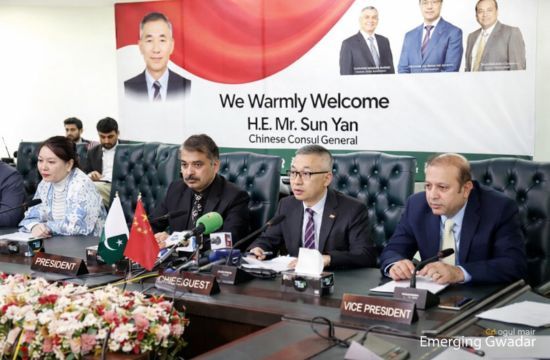
The newly-appointed Chinese Consul General in Lahore, Sun Yan, has highlighted that Pakistan and China are entering an upgraded phase of cooperation under CPEC 2.0, which is expected to open new avenues of economic collaboration across multiple sectors. Speaking at the Lahore Chamber of Commerce and Industry (LCCI), he emphasized that the next phase of the China-Pakistan Economic Corridor will focus on key areas such as industry, agriculture, and mining, while also underscoring the importance of human capital development.
Addressing participants at the concluding ceremony of a three-month Chinese language course organized for the business community, Sun Yan stressed that proficiency in the Chinese language will play a critical role in strengthening bilateral ties. He noted that as CPEC expands, professionals with an understanding of Chinese language and culture will be in increasing demand, as language serves as a vital bridge for communication, trust-building, and effective business collaboration.
The event was attended by LCCI President Faheem Ur Rehman Saigol, Chinese Commercial Consul Li Haoteng, LCCI Vice President Khurram Lodhi, and several executive committee members. In his remarks, Faheem Ur Rehman Saigol reaffirmed the enduring and time-tested friendship between Pakistan and China, describing it as a relationship built on mutual trust, sincerity, and consistent support through challenging times.
He highlighted that the China-Pakistan Economic Corridor has transformed bilateral relations into a comprehensive strategic partnership encompassing trade, infrastructure, technology, and people-to-people connections. China continues to be Pakistan’s largest trading partner, reflecting deep economic engagement. However, he pointed out a notable trade imbalance, with Pakistan’s exports to China standing at around 2.5 billion dollars compared to imports of approximately 16.3 billion dollars, stressing the need for corrective measures.
Saigol expressed optimism that with the support of the Chinese Consulate, Pakistani exporters could better utilize the China-Pakistan Free Trade Agreement to expand their presence in the Chinese market. He identified key sectors with strong export potential, including agriculture, food processing, minerals, seafood, surgical instruments, sports goods, textiles, leather products, and IT services.
He further emphasized that Pakistan offers attractive investment opportunities in areas such as information technology, renewable energy, agriculture, electric vehicles, textiles, and value-added manufacturing. The Special Economic Zones established under CPEC, he noted, provide an ideal platform for Chinese investors to expand their operations while leveraging Pakistan’s strategic geographic location.
Highlighting global economic challenges, Saigol also pointed to ongoing geopolitical tensions involving Iran, Israel, and the United States, which have contributed to uncertainty in international markets. He expressed confidence in China’s constructive role in promoting dialogue and stability, emphasizing that sustainable economic growth depends on cooperation and peaceful engagement.
The LCCI leadership appreciated the Chinese Consulate’s continued support, particularly in facilitating the business community and promoting Chinese language training programs. Such initiatives, they noted, enable entrepreneurs to better understand Chinese business practices and strengthen communication, directly contributing to enhanced trade relations.
LCCI Vice President Khurram Lodhi also praised the language training initiative, stating that it equips the business community with essential tools to engage more effectively with Chinese counterparts. He remarked that learning Chinese can unlock new opportunities for trade, investment, and joint ventures, particularly under the evolving framework of CPEC 2.0.
In his concluding remarks, Sun Yan congratulated the course participants for their dedication and commitment, describing their efforts as a reflection of a forward-looking vision. He reaffirmed that Pakistan and China share an “all-weather strategic cooperative partnership,” marked by high-level coordination, mutual respect, and shared development goals.
He also highlighted the progress of major infrastructure projects such as Gwadar Port, the Karakoram Highway, and the year-round opening of the Khunjerab Pass, noting their significant role in enhancing regional connectivity and facilitating trade. These developments, he said, are laying a strong foundation for deeper economic integration and long-term cooperation.
Marking the 75th anniversary of diplomatic relations between Pakistan and China, Sun Yan expressed confidence that the enduring partnership will continue to grow stronger, creating new economic opportunities and delivering mutual benefits for both nations.