9th CPEC Media Forum reinforces media as a pillar of CPEC 2.0 cooperation
The 9th China-Pakistan Economic Corridor (CPEC) Media Forum, held recently, went far beyond a routine exchange of views, serving as a timely reminder that media has become a strategic pillar of the China-Pakistan relationship. At a time of intensifying geopolitical competition and the rapid spread of disinformation, the forum underscored the growing recognition that effective, credible communication is essential to the long-term success of major international partnerships such as CPEC.
Speaking at the forum, Prof. Cheng Xizhong, Senior Research Fellow at the Charhar Institute, a Beijing-based Chinese think tank focused on diplomacy and international studies, noted that the event’s theme—“Strengthen Media Cooperation, Advance the Construction of the Upgraded Version 2.0 of CPEC”—reflected a shared understanding between both countries. Without accurate and responsible media engagement, even the most ambitious infrastructure and development initiatives risk being misunderstood or deliberately misrepresented.
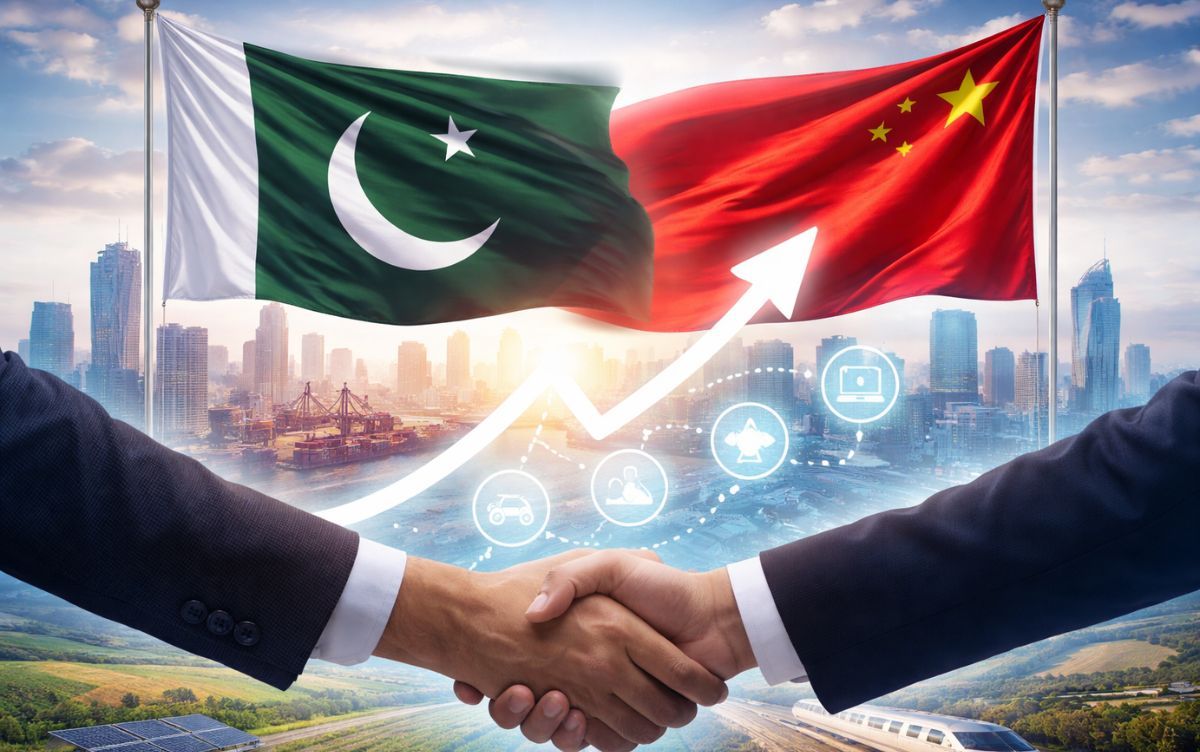
Prof. Cheng emphasised that discussions at this year’s forum made it clear that media is no longer a peripheral player in China-Pakistan relations. Instead, it now occupies a frontline role in shaping public opinion, countering false narratives, and safeguarding mutual trust. Pakistani and Chinese participants alike highlighted that in an era increasingly defined by “information warfare,” misinformation can harm national reputations, weaken public confidence in policies, and even pose risks to national security.
In this context, the proposal by Pakistan’s Federal Minister for Information and Broadcasting, Attaullah Tarar, to establish a China-Pakistan joint fact-checking mechanism was described as a significant and practical step. According to Prof. Cheng, this initiative is not merely a technical solution but a concrete measure aimed at protecting the bilateral relationship from external manipulation and coordinated disinformation campaigns.
He further pointed to Chinese Ambassador Jiang Zaidong’s call for media professionals to act as “bridges” between the two nations. This, he said, reflects an expectation that journalists and analysts should not only report on what CPEC is delivering, but also explain why it matters to ordinary people in both countries. As CPEC moves into its Version 2.0 phase, with a stronger focus on high-tech industries, green development, and people-centred projects, the role of nuanced and informed storytelling becomes even more critical.
The shift from narratives centred mainly on ports and power plants towards stories highlighting job creation, energy security, climate cooperation, and social development requires skilled journalists and subject-matter experts who can provide context and clarity. Minister of State for Climate Change, Shezra Mansab Ali Kharal, also stressed that media has an important role in projecting a positive image of China’s cooperation with the Global South, offering a counterbalance to confrontational narratives prevalent in parts of Western discourse.
The participation of senior journalists, think-tank scholars, and business representatives at the forum demonstrated that media cooperation under CPEC is a multi-stakeholder effort. It is not limited to official government messaging, but involves building strong personal and institutional networks among professionals who shape perceptions of China and Pakistan both domestically and internationally.
In essence, the 9th CPEC Media Forum reinforced a simple yet powerful message: while infrastructure connects countries physically, media connects them in the minds and hearts of their people. By promoting accurate, timely, and responsible reporting, China and Pakistan are investing not only in roads, ports, and power grids, but also in a shared narrative capable of withstanding the pressures of an increasingly complex global environment.